


The haunting Nightmares
Yvonne Moka never imagined that reporting on femicide and violence against women and girls (VAWG) would force her to relive her own buried traumas. What she thought would be a professional duty quickly became a personal awakening to the scars she thought she had left behind.
The Journalist and the survivor
Each story Yvonne tells is not just a pursuit of justice for victims but also a fight for her own sanity. With every case of femicide she investigates, she carries the emotional burden of being both a journalist and a survivor.
In a chilling interview, she opens up about the psychological weight of walking this double path: documenting the suffering of others while constantly confronting echoes of her own.
Yvonne Moka’s Fight for Justice Begins with a Tear-Stained Story
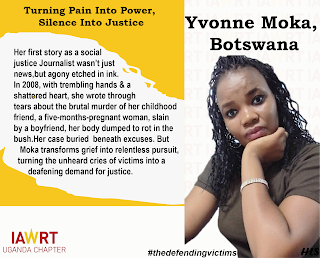
Yvonne Moka, a passionate social justice journalist from Botswana, never anticipated that her first major social justice story would be the one that shattered her heart.
“My home girl, we grew up together. We shared everything—church, music, village life. She was like my sister. When I left for university, she stayed behind. “Over time, she started dating a gangster from the village, which displeased me,” Moka recalls “But she made her choices. Then, one fateful day, I received a call from her neighbor: ‘She’s dead. The boyfriend has killed her.’” Moka’s voice breaks with grief as she recalls the memory of her friend’s murder, even though it has been more than 15 years.
In December 2008, Yvonne Moka, a young journalist at the time, wrote her first story a heart-wrenching piece born from a broken heart. She wrote through tears, her hands trembling as grief poured out onto the page. The man Moka”s childhood friend called boy fried had brutally murdered her . The man, under the influence of drugs, killed her while she was pregnant and discarded her body in a bush. By the time the police found her, her body had already decomposed.
Yet, despite clear evidence and phone records pointing to the perpetrators, the justice system failed to bring the criminals to justice. “The suspects walked free after a few days because they well connected. It was as if their privilege shielded them from justice,” Moka says bitterly. “The killers of my homegirl are still walking free today, and the case remains unresolved.”
Justice Lost in a Broken System
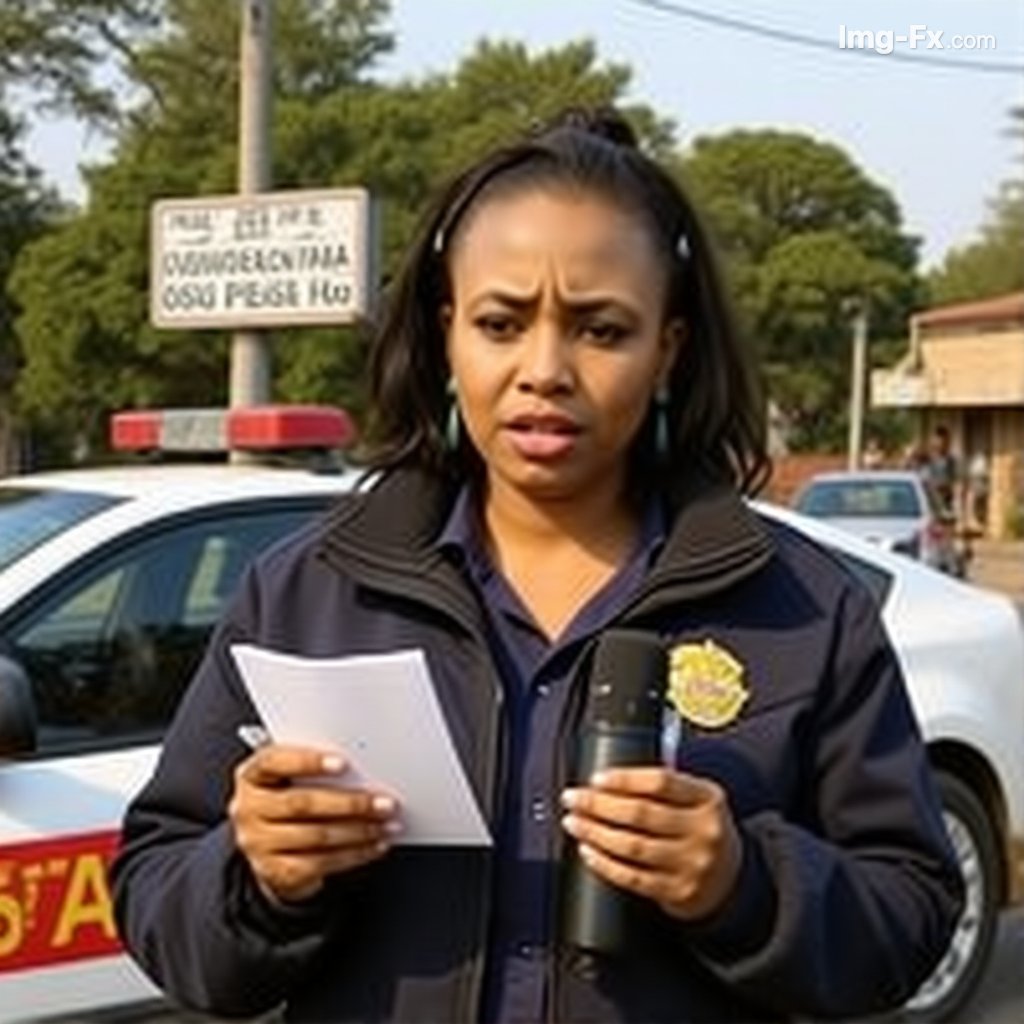
Moka’s pursuit of justice for her friend led her down a path of frustration and dead ends. “The last time I followed up on this case was in 2020,” she shares. “And guess what? The public prosecutors still say they can’t find the file. The police kept giving excuses, from case file officers’ transfers to different stations until file just went missing.”
But the tragic loss did not end there, Moka followed up another story of a life cut short; one that hit even closer to home. A boyfriend murdered a promising young woman, just about to complete her final-year university exams. On that fateful day, her boyfriend, a soldier, strangled her with his gun belt before taking his own life.
For the public, it was another tragic headline. But for Moka, it was a wound that never fully healed. “I still remember it like it was yesterday—her body hanging from the rooftop, the blood, the pain. And worst of all, she had kids… three little kids left without a mother,” Moka says tearfully.
More Than Just a Story
Moka’s heartbreak goes beyond the stories she tells. She made the long journey to the Central District for the funeral, needing to stand among the mourners—not as a reporter, but as a human being.
The reality of the loss weighed heavily on her. This young woman had worked tirelessly for a better life, just as Moka had. “They brought the young woman back home dead in a coffin amidst wails and mourning, instead of celebrating her graduation.”
“She was just like me,a daughter, a student, a woman with dreams. But she never got to live them. That thought still haunts me every time I write,” Moka reflects.
The Faces Behind the Headlines
Over the years, Moka has covered countless cases of women trapped in abusive relationships, many of whom never made it out alive. A boyfriend murdered a prominent woman, Just last year, in 2024, Moka had been in touch with her only weeks before, listening to voice notes filled with fear and despair.
Later, at a project launch under the Global Forum of Women Entrepreneurs, Moka stood before a board displaying the faces of over 15 women, all murdered by their partners. Yvonne had known more than 10 of them personally. She had spoken to them. She had told their stories. Now, she could only mourn them.
“I cried when i looked at those photos, because these weren’t just images and stories, but real women i had talked to, who had dreams, who should still be alive,” Moka says, her voice heavy with emotion.
The Unseen Toll on a Journalist’s Soul
For many, these tragedies exist only in passing, a brief moment of sorrow before moving on. But for Moka, the weight of these stories never fades. Journalists have no time to grieve or process the horrors they witness but expected to churn out multiple stories a week, . One day, Moka is attending a funeral 600 kilometers away; the next, she is covering another heartbreaking case.
“There’s no time to cry. No time to breathe. but to expected to move on, find the next story. But how do you move on when you’ve just watched a mother’s children bury her?” Moka says with a tone of despair.
No Support, No Relief—Only Survival
The weight of these stories haunt her. Moka remembers witnessing a woman’s body exhumed from a shallow grave.“A former boyfriend, who refused to leave her alone after he had married, murdered the woman.” The body details : the smell, the red nail polish on her lifeless hands—are forever fresh in Moka’s memory. And yet, there was no emotional support or mental health resources from her workplace. There was only the expectation to keep going.
“There was nothing—no emotional support, no therapy, no debriefing. I had to rely on my faith, on my books, on my prayers. Because if I didn’t, I don’t know how I would have survived,” she says.
The Unseen Toll: Reporting Violence, Living the Trauma
Moka’s story is not unique. It is one of many shared by female journalists who cover femicide and Violence Against Women and Girls. “These are just a few cases among dozens that I have reported on. “I have not seen justice served in many cases of women and girls murdered by their intimate partners,” Moka reflects.
For Moka, and journalists like her, reporting on femicide is not just a job—it is a battle against systemic indifference, corruption, and failure. “It tears me apart every time I write these stories. These women were like sisters to me. I can’t just report their deaths as if they were statistics. Their pain stays with me,” Moka shares. “Writing these stories is like reliving the grief over and over again. But I do it because no one else will.”
A World in Denial: The Global Femicide Crisis
UN statistics show that intimate partners or family members murdered 51,100 of the 85,000 women and girls killed worldwide in 2023. These perpetrators killed an average of 140 women and girls every day; one woman every ten minutes.
Female journalists covering violence against women and girls are not just exposing injustice-they are risking their own safety. The same violence they report on is the same violence that threatens them.
Moka’s story is just the beginning. In the next part of this series, more female journalists will share their own harrowing accounts of reporting femicide and Violence Against Women and Girls. Their stories are painful, but they are also a testament to courage, resilience, and the fight for justice.
As these journalists risk everything to expose the horrors inflicted on women and girls, society must step up. Their work is essential, and their safety must be a priority. These women are not just reporting the news—they are breaking the silence, one story at a time.


.png)